
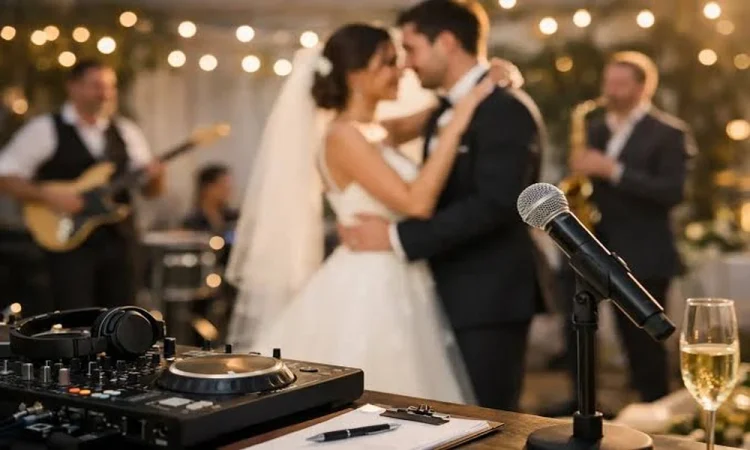
The band is ready, the speeches have finished, and half the guests are still waiting for dinner. Nobody has done anything unreasonable, yet the evening has lost its pace. Wedding entertainment works better when performers and caterers plan from the same timetable. Food service affects who is listening, where guests stand and whether the next performance has an audience.
A reception does not need music at full volume throughout. It needs the right kind of sound at the moments when guests can appreciate it.
Share one running order
Include the meal and entertainment in one document, with a named person responsible for updates.
- Give the catering team the planned speech times, first dance and live performance periods. Each can affect when servers enter the room.
- Give musicians the proposed dining sequence, including any food stations that may draw guests away.
- Include arrival, preparation and departure times for suppliers. These often matter as much as the public program.
For an Italian wedding, catering per matrimoni can form part of the supplier research. Ask about coordination with the venue and entertainers as well as the proposed food. A workable timetable should account for the people delivering it.
Keep arrival music conversational
The opening part of a wedding often brings together guests who have not met before. Leave enough space for introductions.
- Choose music that supports conversation rather than demanding attention. Discuss the atmosphere with the performers in plain language.
- Place speakers so guests can hear without standing beside them to speak to the bar staff.
- Decide whether the musicians will announce the move to dinner or whether a host will make that announcement.
Avoid treating the arrival period as a smaller version of the evening party. Its purpose is different. Guests may be finding seats, greeting relatives and getting their bearings.
Give speeches a clear place
Speeches lose impact when they compete with plates, queues and kitchen noise.
- Tell the caterer exactly when service should pause and when it may resume. Agree this before the event.
- Ask speakers for a realistic length, allowing a little extra room rather than scheduling every minute tightly.
- Arrange a microphone check before guests enter. The person making announcements needs to know how the equipment works.
Do not assume a quiet room will happen automatically when someone stands up. Staff need a clear signal, and guests need to understand that a speech is beginning.
Protect the performers’ working time
Live musicians have preparation needs and agreed performance periods. These belong in the plan.
- Confirm when performers can eat and where their meals will be served. Their break should fit the public schedule.
- Agree how delays affect the evening. An earlier dinner overrun may not allow a band’s contracted finish time to move.
- Keep the route for equipment separate from food collection wherever the venue permits.
These points are ordinary production details. Discussing them early avoids asking suppliers to solve incompatible requests while guests wait.
Use live cooking with intention
Food preparation for catering per matrimoni can become something guests want to watch, but it can also compete with a performance.
- Schedule a cooking demonstration during a period intended for movement and conversation.
- Keep introductions or short performances away from the moment guests are invited to collect food.
- Ask the supplier about working noise before locating cooking equipment near a performer.
When comparing catering per matrimoni arrangements, consider whether watching the cooking is central to the meal or simply an optional attraction. That distinction helps the entertainment team plan.
Give the dancing a clean beginning
The first dance works best when most guests can gather without abandoning a meal.
- Check that the main service has reached every table before making the announcement.
- Allow staff to clear the route to the dance floor.
- Choose one person to confirm readiness with both the caterer and the band.
A short, coordinated pause often produces a better moment than a hurried announcement. Guests know where to look, the performers have their cue and the couple can enjoy a beginning that feels intentional.